
Futuremug positions itself as a quality-first interview outsourcing platform built around senior interviewers, AI proctoring, and strong human oversight.
That strength comes with a trade-off.
As interview volume grows, manual workflows, lack of structured rubrics, and throughput limits begin to slow teams down and reduce consistency.
This review breaks down:
- Where Futuremug performs well
- Where buyers typically feel friction
- Why teams hiring at scale often choose Intervue instead
Futuremug at a glance
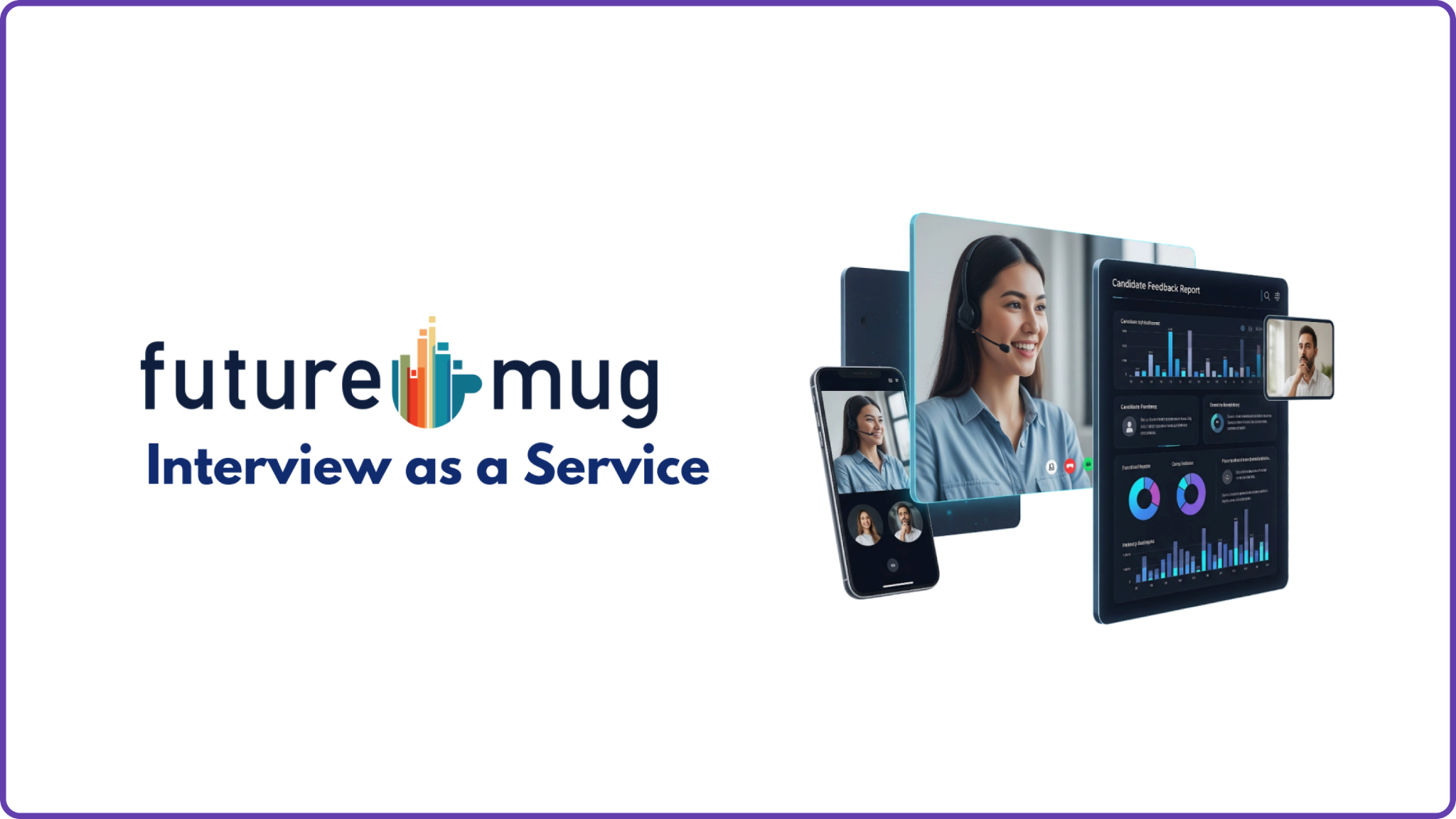
Futuremug offers Interview-as-a-Service across IT and non-IT roles, backed by a freelance interviewer pool with a strong seniority bias.
Key highlights
- AI-based resume-to-JD matching (sold separately also)
- AI proctoring during interviews
- Interactive AI interviewer for early screening
- Manual panel selection by an internal operations team
Futuremug prioritises control and human judgment, but relies heavily on manual operations rather than system-led automation
Pros & Cons
Pros
- Supports both IT and non-IT roles
- AI proctoring (tab switching, gaze tracking, recording review)
- Interactive AI interviewer for initial screening rounds
Cons
- No predefined rubrics or sub-skill frameworks
- Heavy reliance on manual operations (panel selection, calibration, scheduling)
- Limited daily interview throughput (~100/day)
- No automated scheduling or interviewer matching logic
- Evaluation quality depends heavily on calibration calls and meeting notes
- 6-hour report turnaround time [Intervue does it in 2 hours]
Futuremug feature breakdown
1. No rubrics, just calibration calls and playbooks
Futuremug does not operate on predefined rubrics.
Instead:
- Calibration calls define expectations
- Must-have vs good-to-have criteria are documented
- Custom questions live in playbooks or meeting notes
This provides flexibility, but also introduces risk:
- Evaluation standards vary by interviewer
- Reports are harder to compare
- Consistency depends on memory and interpretation
Intervue difference:
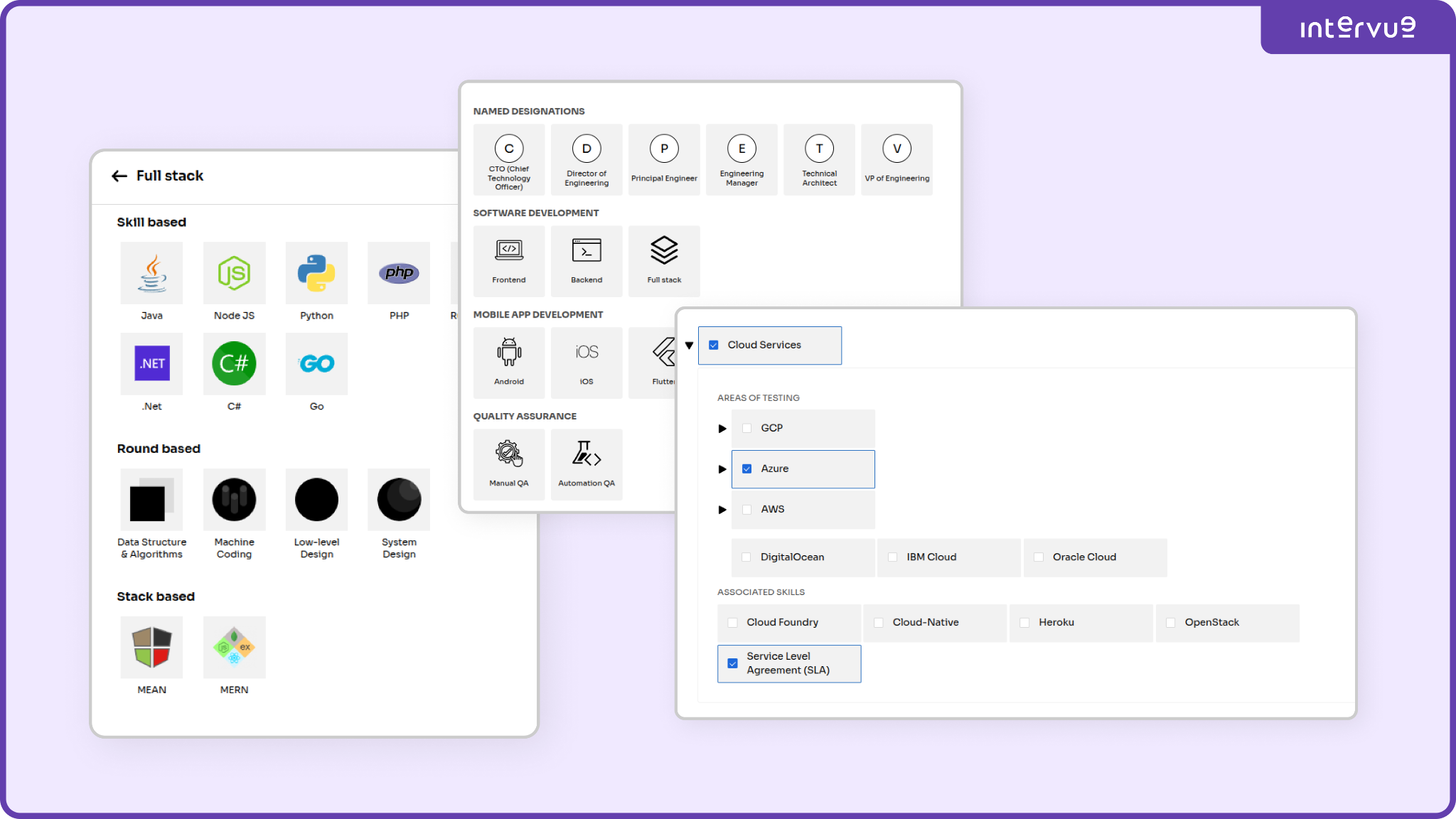
Evaluations are structured at skill and sub-skill level, removing ambiguity and reducing reliance on repeated calibration.
2. Senior interviewers, but manual panel selection
Futuremug’s senior-heavy interviewer pool is a genuine strength.
However:
- Panel selection is done manually by an ops team
- Matching relies on human interpretation of the JD
- Nothing is automated
This works at low volumes, but becomes a bottleneck as hiring scales.
Intervue difference:
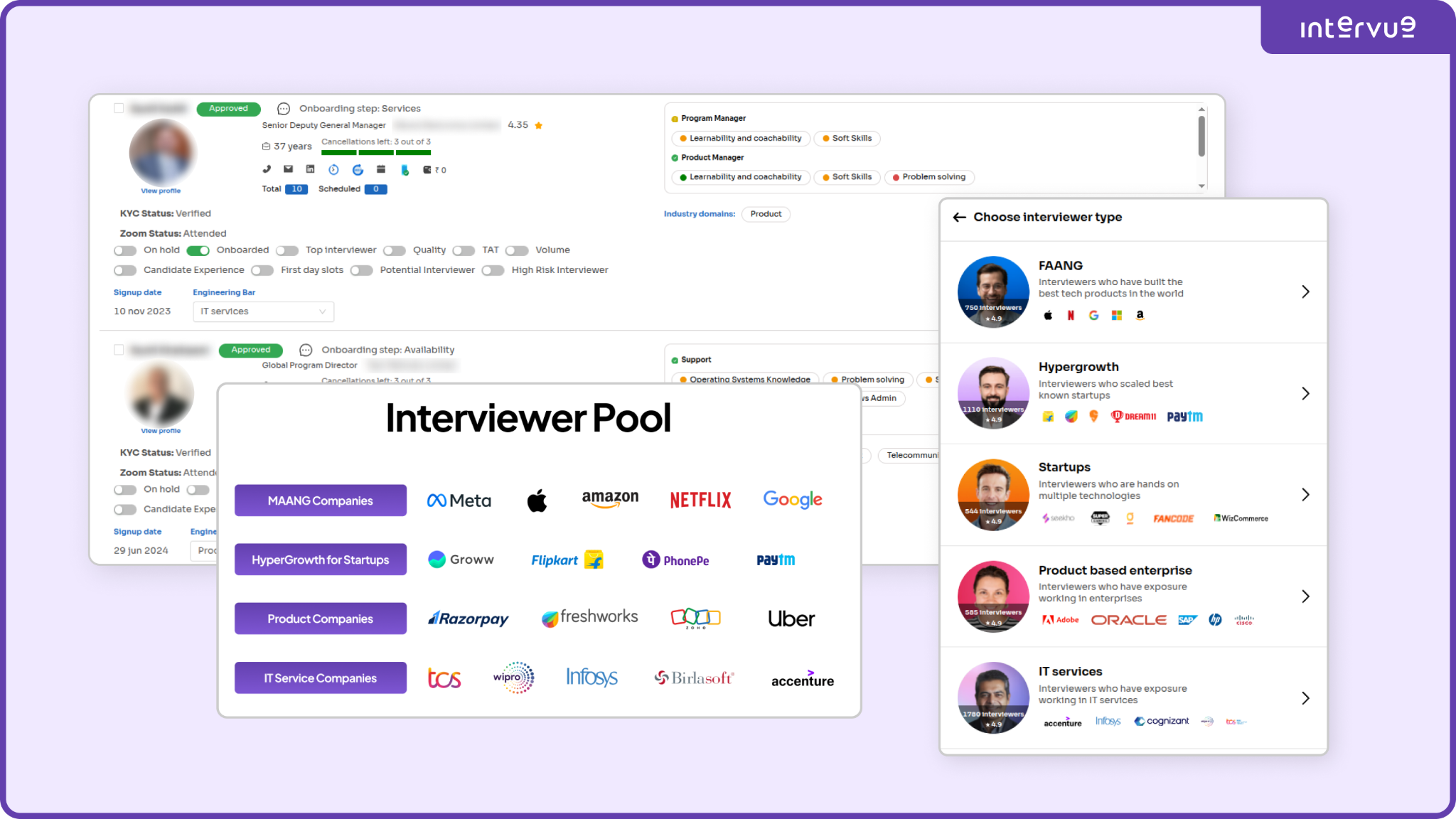
Automated interviewer-role matching using structured rubrics ensures speed, quality & consistency without manual coordination.
3. AI proctoring: similar strength
Futuremug’s AI proctoring includes:
- Tab-switch detection
- Gaze tracking
- Full interview recordings reviewed by a quality team
This is one of Futuremug’s strongest capabilities and helps maintain interview integrity.
Intervue difference:
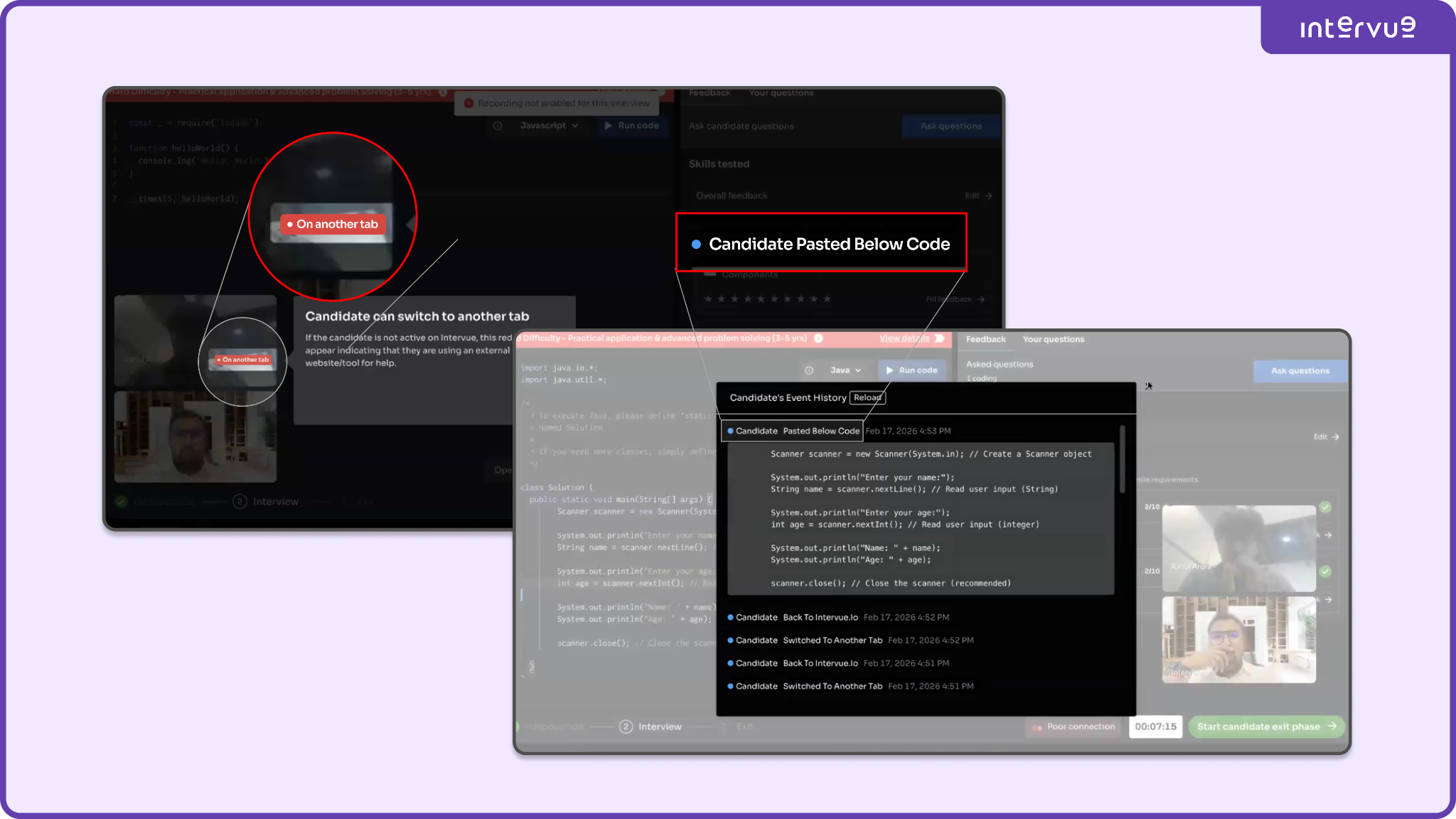
Offers proctored interviews as well, paired with structured evaluation, ensuring integrity and comparability.
4. Scheduling and reminders: manual-heavy
Futuremug uses:
- SMS, email, and WhatsApp reminders
- Manual coordination by operations teams
This keeps oversight tight, but:
- Caps at ~100 interviews/day [Intervue scales to 1,000/day]
- Increases dependency on human effort
Intervue difference:
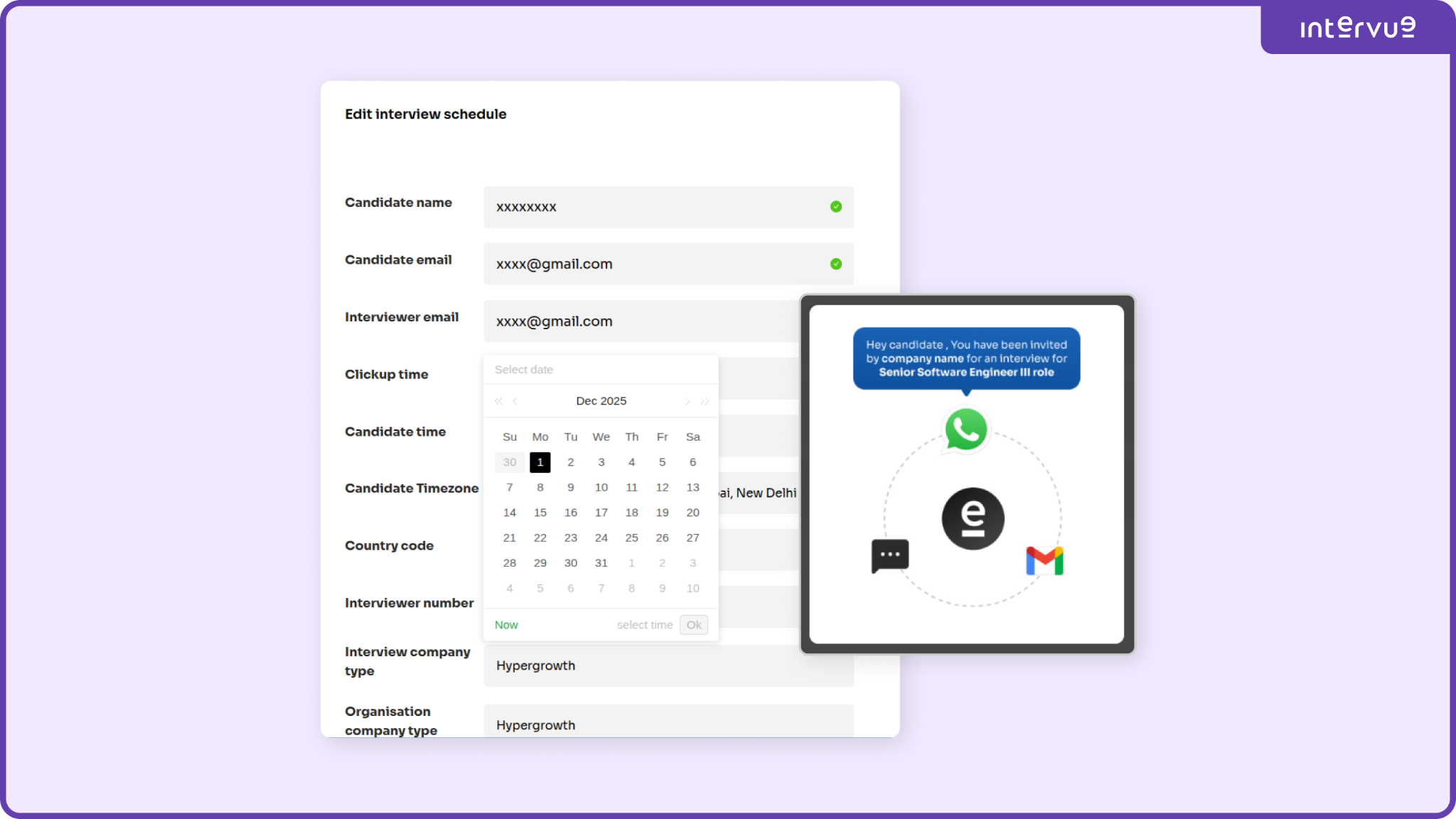
Automated scheduling and reminder workflows across email, WhatsApp, and SMS, with calls layered in only when needed, maintaining low no-show rates without manual bottlenecks.
Futuremug pricing
Futuremug requires:
- An upfront purchase of 50 interview credits to get started
- A move to post-paid pricing only after initial usage
Pricing details are shared during sales discussions.
While viable for controlled volumes, manual operations can introduce hidden scaling costs.
The alternative: Intervue
If Futuremug appeals for its senior interviewers and integrity controls, Intervue solves the same problem with a system-first approach.
Where Futuremug relies on:
- Manual calibration
- Ops-led panel selection
- Playbooks and notes
Intervue provides:
- Rubric-based evaluation with sub-skill scoring
- Automated interviewer-role matching
- Proctored interview environments
- Scalable scheduling and reminders
- IT and non-IT hiring on one platform
The difference isn’t interviewer quality, it’s repeatability, speed, and decision confidence at scale.
Additional benefits with Intervue
Watch interviews live
Join or observe interviews in real time to support calibration and quality checks.
Get feedback faster
Interview reports shared within 2 hours to avoid decision delays.
Know your interviewers
View interviewer background and experience after each interview.
Interview anytime, anywhere (24×7)
Offer candidates flexible interview slots across all time zones.
Futuremug vs Intervue: Which One Fits?
Futuremug is a fit if:
- Senior interviewers are the top priority
- Hiring volumes are low to moderate
- Manual calibration and oversight are acceptable
Intervue is a better fit if:
- You are hiring at scale across roles and levels
- Evaluations must be consistent and comparable
- You want automation without losing quality control
- Reports need to be delivered faster [within 2 hours]
At scale, structure beats manual control every time.
[See how Intervue standardises interview quality without slowing you down →]
Frequently Asked Questions
Does Futuremug support non-IT roles?
Yes. Futuremug supports both IT and non-IT roles.
Does Futuremug use structured rubrics?
No. Evaluation criteria are defined during calibration calls and shared via playbooks, not enforced through sub-skill rubrics.
Are Futuremug interviews proctored?
Yes. Futuremug uses AI proctoring and manual quality reviews of recordings.
Is there an upfront commitment with Futuremug?
Yes. Purchasing credits for 50 interviews is mandatory to get started.
What is a strong alternative to Futuremug for scalable, structured hiring?
Intervue offers rubric-based evaluation, automated interviewer matching, proctoring, and scalable scheduling across IT and non-IT roles.