Interview Vector is a technical interview outsourcing platform focused on giving companies access to freelance interviewers for coding and system design interviews.
It edges in on simplicity and availability, but when teams scale or start hiring beyond junior technical screens, the model shows important limitations.
This review covers: what Interview Vector does well, where trade-offs emerge, why teams with quality-first hiring needs look at Intervue instead
Interview Vector at a glance
Interview Vector connects companies with freelance technical interviewers, primarily working professionals from Tier-1 companies, to conduct coding and system design interviews.
How it works
- Interviews run on Google Meet
- Coding via a LeetCode interface
- Interviewers sourced from a freelance pool
Key characteristics
- IT-only interview support
- Daily availability from freelance interviewers
- Familiar but unproctored tooling
- Candidate reminders via WhatsApp and pre-interview calls
The platform is simple, fast, and familiar, but that simplicity introduces limitations as hiring complexity increases.
Pros & Cons
Pros
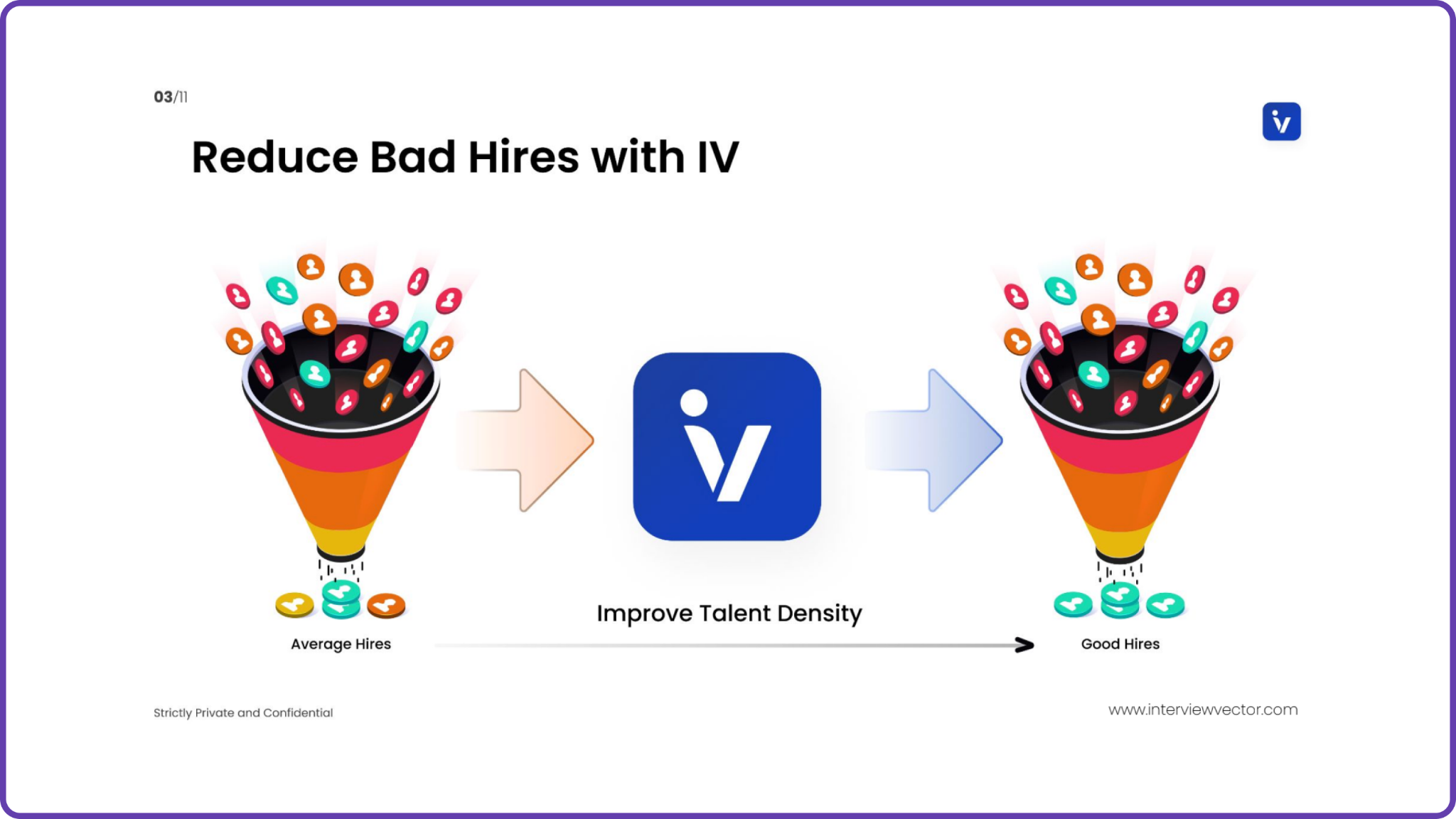
- Access to freelance technical interviewers with professional experience
- Familiar coding interface (LeetCode) for candidates
- Option to shadow interviews when needed
- Automated reminders via WhatsApp and confirmation calls
Cons
- No non-IT role coverage
- No built-in proctoring beyond screen-sharing
- No skill-and-sub-skill rubric structure
- Interviewer expertise not tiered or validated by level of experience
- Basic report quality, limited depth for confident decision-making
Interview Vector feature breakdown
1. Interviewer Network: Experience Without Clarity
Interview Vector highlights interviewers from Tier-1 companies, but does not tier or map interviewer expertise by seniority or role complexity.
As a result:
- Senior roles may be assessed by interviewers without proven senior-level evaluation experience
- Matching depth depends heavily on internal judgment
Intervue difference:
Interviewers are tier-mapped by domain depth, role complexity, and seniority.
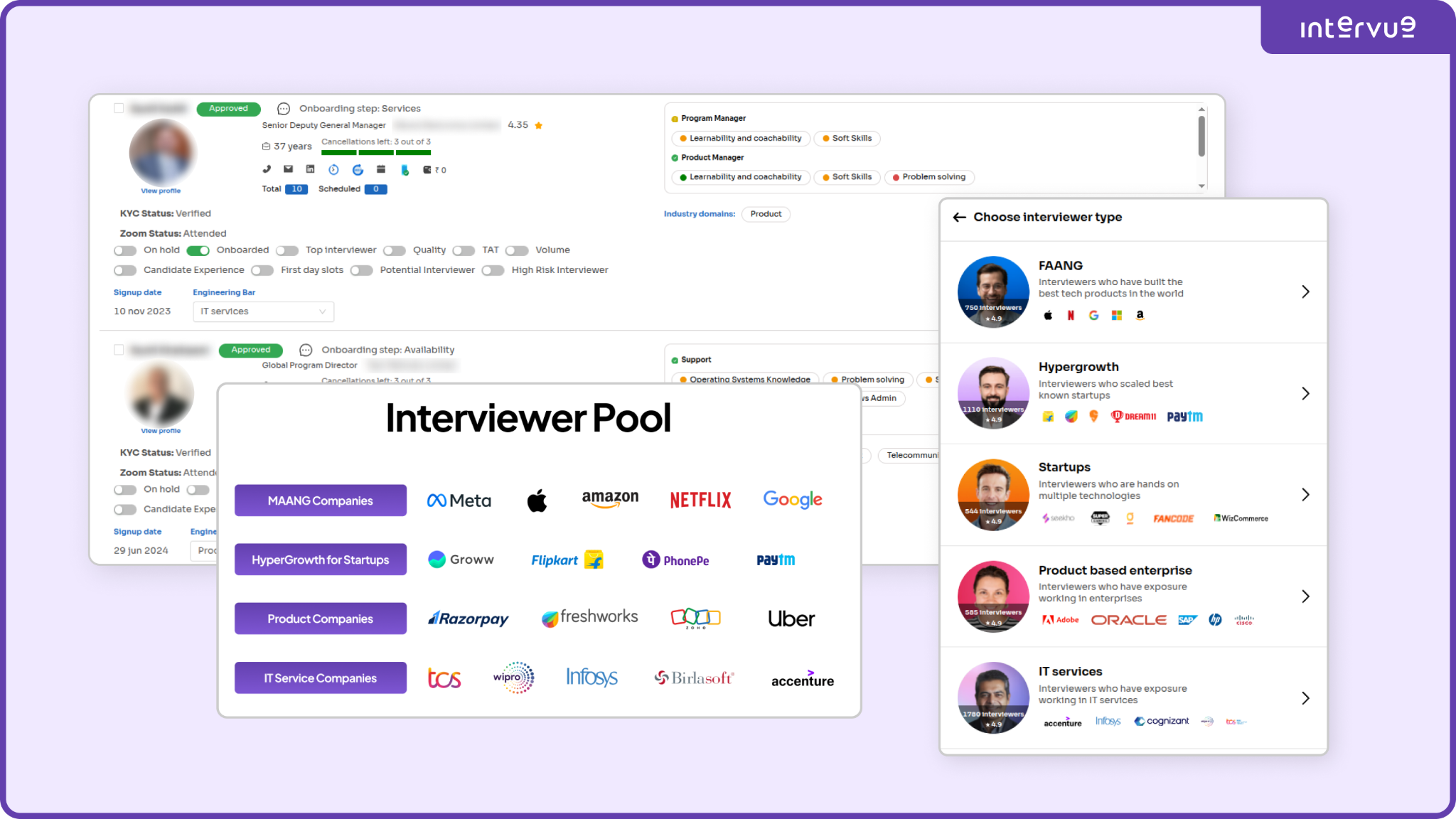
This ensures senior roles are evaluated by interviewers with demonstrable experience at that level.
2. Coding environment and proctoring
Interview Vector uses:
- Google Meet
- Screen sharing
- A LeetCode coding interface
What’s missing:
- No tab-switch detection
- No copy-paste monitoring
- No environment-level integrity controls
For teams where assessment integrity matters, these blind spots compound risk.
Intervue difference:
Own proprietary coding environment with built-in proctoring, behaviour signals, and controlled workspaces.
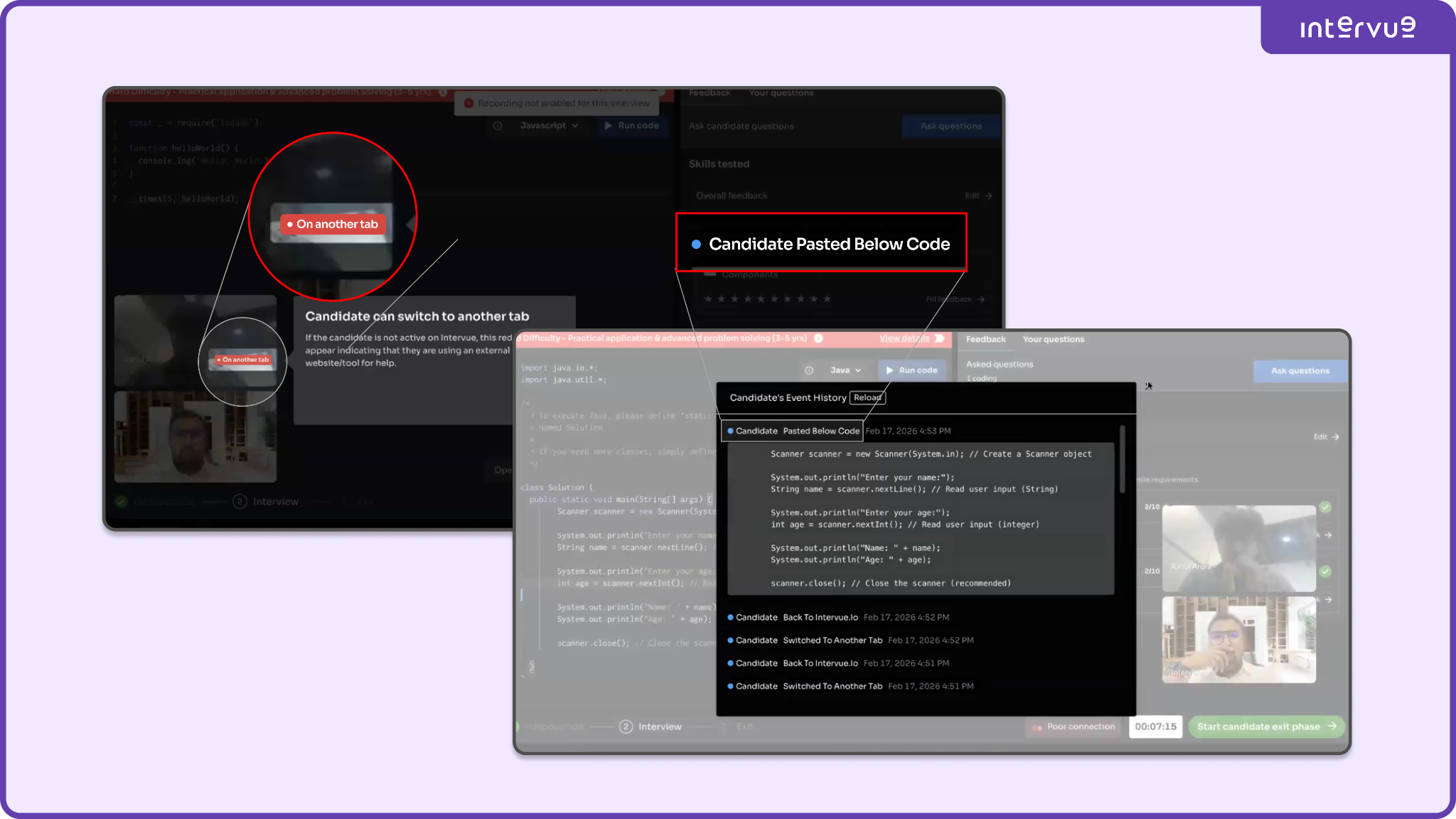
This ensures candidate activity aligns with evaluation expectations.
3. Evaluation structure
Interview Vector allows:
- Primary and secondary skill selection
- Adjustable skill weightages
What it doesn’t enforce:
- Sub-skill breakdowns
- Standardised scoring criteria
- Consistent evaluation benchmarks
This leads to variance in interviewer judgments, even for the same role.
Intervue difference:
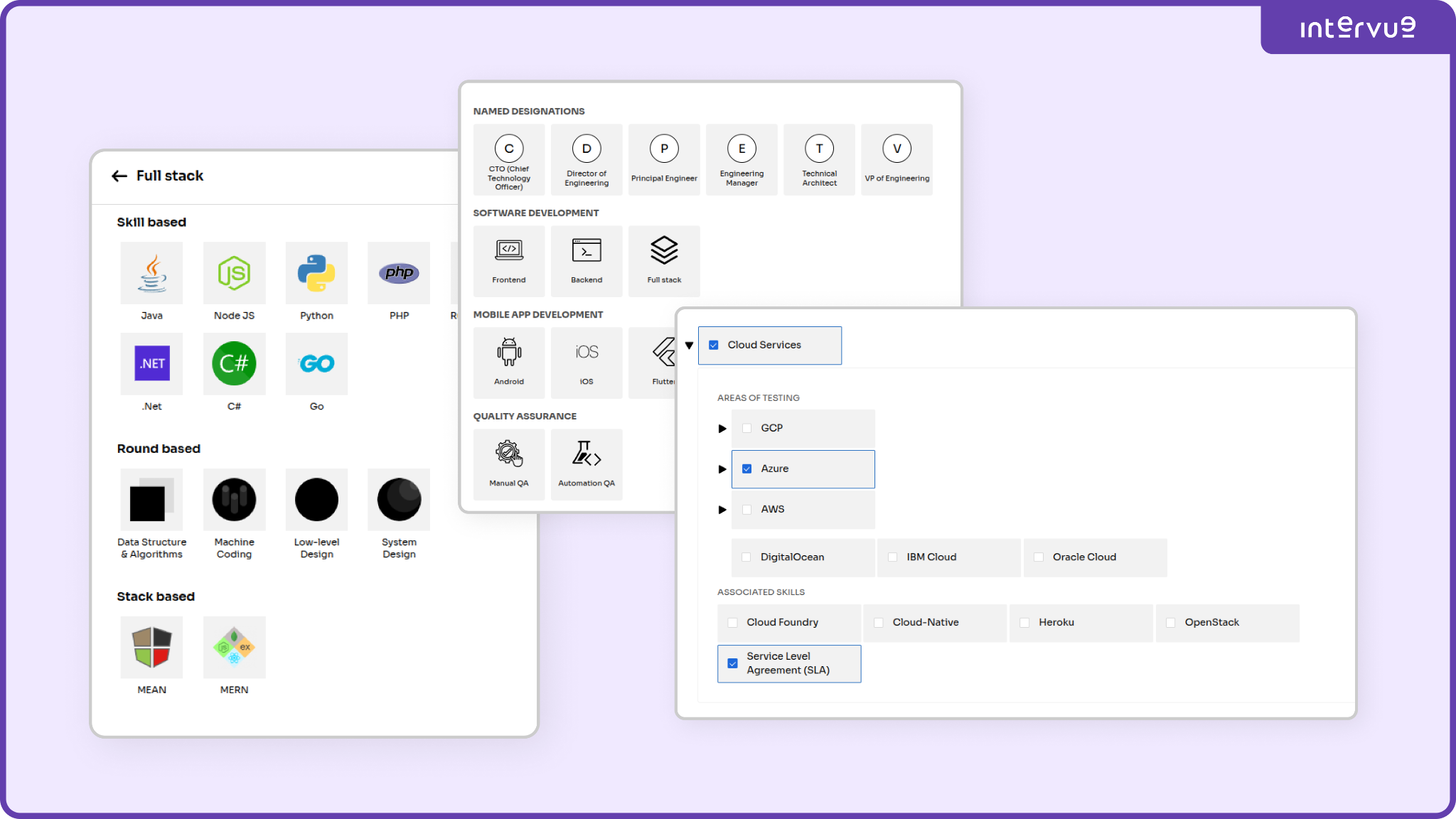
Structured rubrics break each skill into defined sub-skills with consistent scoring, making evaluations comparable across candidates, interviewers, and roles.
4. Reporting and decision support
Interview Vector reports are typically:
- Descriptive summaries
- Focused on what happened in the interview
They work for early filtering, but often lack the depth senior hiring managers need for confident decisions.
Intervue delivers
- Skill-by-skill breakdowns
- Confidence indicators
- Clear hire / no-hire rationale
- Delivered in ~2 hours post-interview
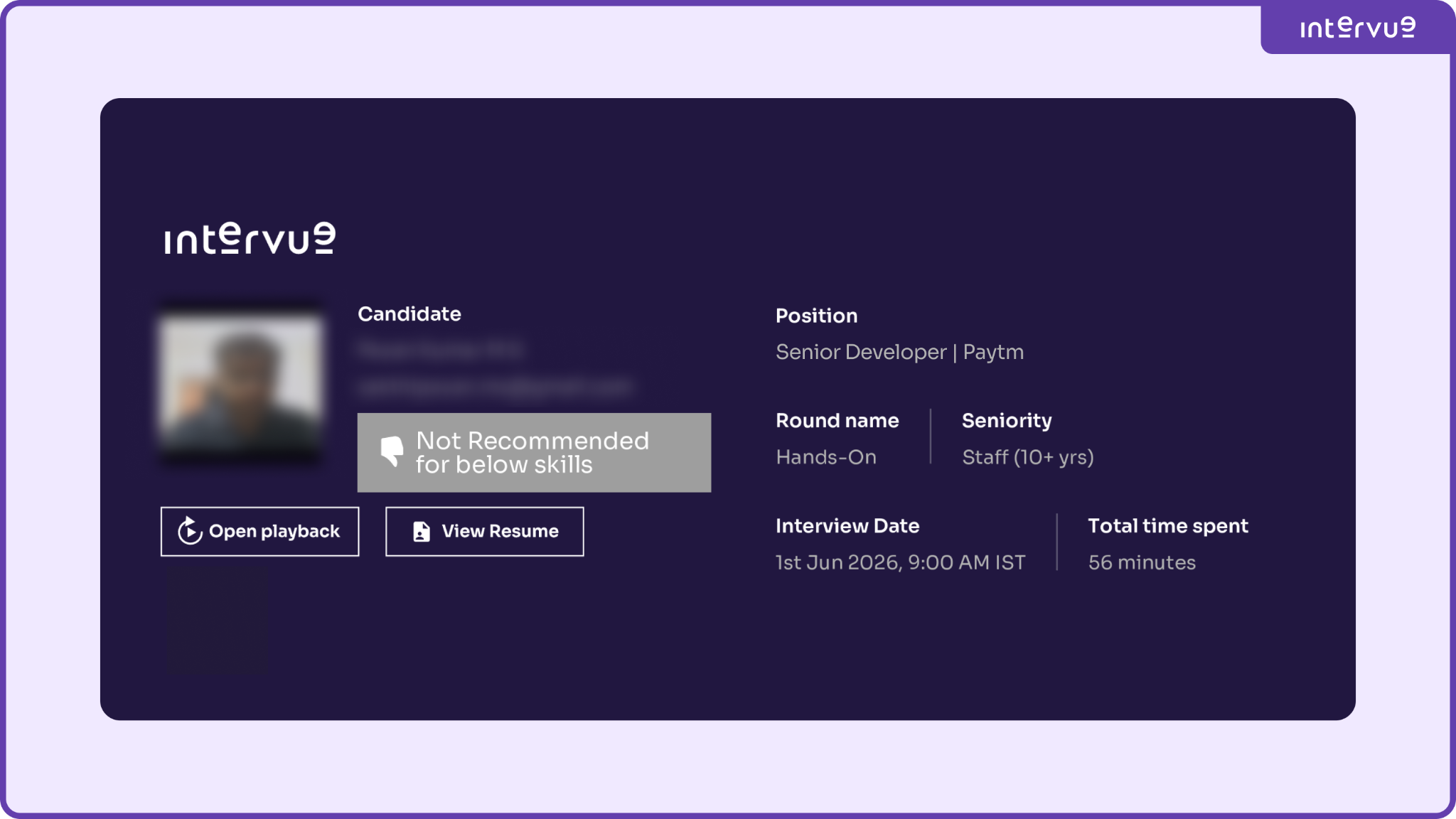
This significantly reduces ambiguity and follow-up cycles.
5. Interview visibility and governance
Interview Vector offers:
- Interview recordings after completion
What’s limited:
- Real-time visibility
- Active governance during interviews
Intervue difference:
Live interview visibility enables:
- Real-time audits
- Calibration across interviewers
- Panel coaching and quality control
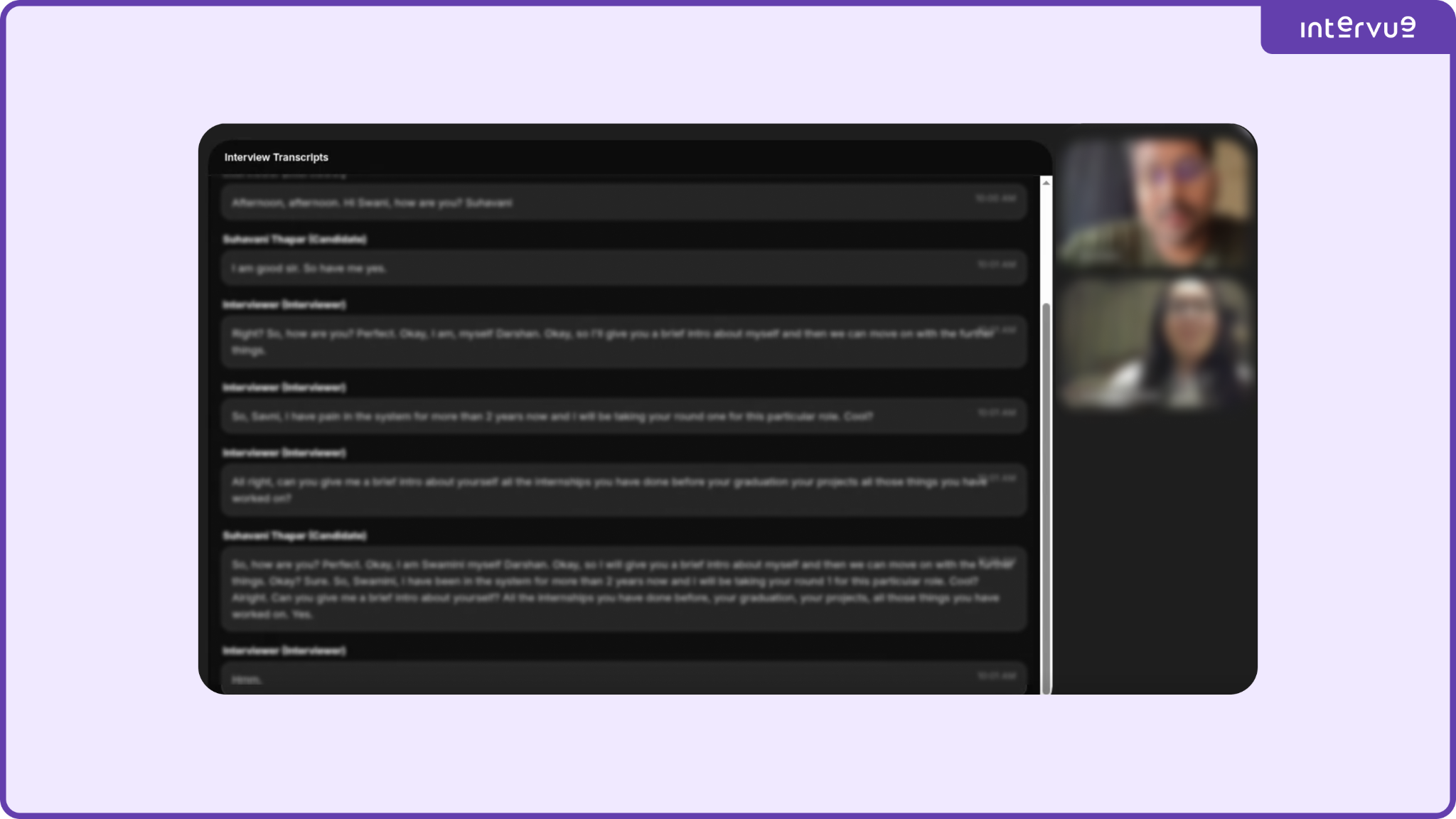
This becomes critical as interview volume grows.
Interview Vector Pricing
Interview Vector follows a per-interview pricing model, with rates varying by volume. Pricing is typically shared during sales discussions.
While straightforward for technical-only hiring, the lack of deep reporting and proctoring can push evaluation effort back onto internal teams, increasing hidden costs.
The alternative: Intervue
If your hiring needs extend beyond simple screening, especially into senior roles or cross-functional functions, Intervue offers a markedly different approach built around interview quality, signal reliability, and decision confidence.
Where Interview Vector’s model depends on freelancer availability and basic evaluation summaries, Intervue offers:
- Rubric-based evaluation with skills broken into sub-skills
- Role-aligned panel selection mapped to experience level
- Own proprietary, proctored interview environment
- Structured, decision-ready 7-pager reports delivered in 2 hours
- Live interview visibility and governance
- Coverage across IT and non-IT hiring
This makes Intervue suitable for organisations building a repeatable, consistent hiring system rather than simply outsourcing individual interviews.
Interview Vector vs Intervue: which one fits
Interview Vector is a reasonable choice if:
- Your hiring is only technical
- Volumes are modest
- You are fine with familiar tools and basic reporting
- Proctoring and post-interview decision support are lower priorities
Intervue is the better fit if you need:
- Standardised evaluation across roles and levels
- Clear, structured reporting for confident decisions
- Interview integrity controls and governance at scale
- A platform that supports both IT and non-IT hiring
At scale, the difference is less about coverage and more about consistency, comparability, and confidence in hiring outcomes.
[See how Intervue standardises interview quality across functions →]
Frequently Asked Questions
What types of roles does Interview Vector support?
Interview Vector focuses exclusively on IT and technical roles.
Are Interview Vector’s coding interviews proctored?
No. Coding interviews run on a LeetCode-style environment via Google Meet with screen sharing, but without native proctoring controls.
Does Interview Vector use structured rubrics?
No. Interview Vector offers primary/secondary skill tagging with weightages, but not a standardised rubric system with sub-skills and defined scoring criteria.
Can hiring teams shadow interviews?
Yes, Interview Vector supports interview shadowing, but real-time visibility options and governance controls are limited compared to more advanced platforms.
What’s a good alternative to Interview Vector for scalable, quality-first hiring?
Intervue provides rubric-based evaluation, proctored tools, structured reporting, and cross-functional support, making it a strong alternative for organisations prioritising consistent outcomes.