Monjin positions itself as a broad interview outsourcing platform with heavy use of AI and coverage across both IT and non-IT roles.
On paper, it looks comprehensive.
In practice, lack of structured evaluation, weak governance, and manual operations start showing cracks as hiring volume grows.
This review covers:
- Where Monjin works well
- Where teams start feeling friction
- Why quality-focused teams move to Intervue
Monjin at a glance
Monjin supports interviews across IT and non-IT roles, including HR, marketing, and operations.
It combines:
- A large freelance interviewer network
- AI-generated follow-up questions
- AI-based interview summaries and hire/no-hire suggestions
- Phone-heavy scheduling workflows
The appeal: breadth + AI assistance
The trade-off: limited depth, weak standardisation
Pros & Cons
Pros
- Supports both IT and non-IT roles, including niche functions
- AI-generated follow-up and reference questions during interviews
- AI-processed transcripts with hire/no-hire summaries
- Supports one-way and two-way AI interviews
Cons
- No structured rubrics or sub-skill-level evaluation
- Interviewer expertise not calibrated against a defined hiring bar
- Minimal interview integrity controls (no tab tracking, paste detection, or proctoring)
- Shallow reports with limited decision clarity
- Manual, phone-heavy scheduling process that does not scale
- Reported reliability issues (bugs, missed interviews, panel mismatches)
Monjin feature breakdown
1. Skill Tagging Without Real Rubrics
Monjin allows:
- “Must-have” and “Good-to-have” skill tagging
- Weightages via an instructions tab
What’s missing:
- No sub-skills
- No standard scoring criteria
- No enforced consistency
This leaves interviewers deciding what “good” looks like on their own, creating variation across candidates and panels.
Intervue difference:
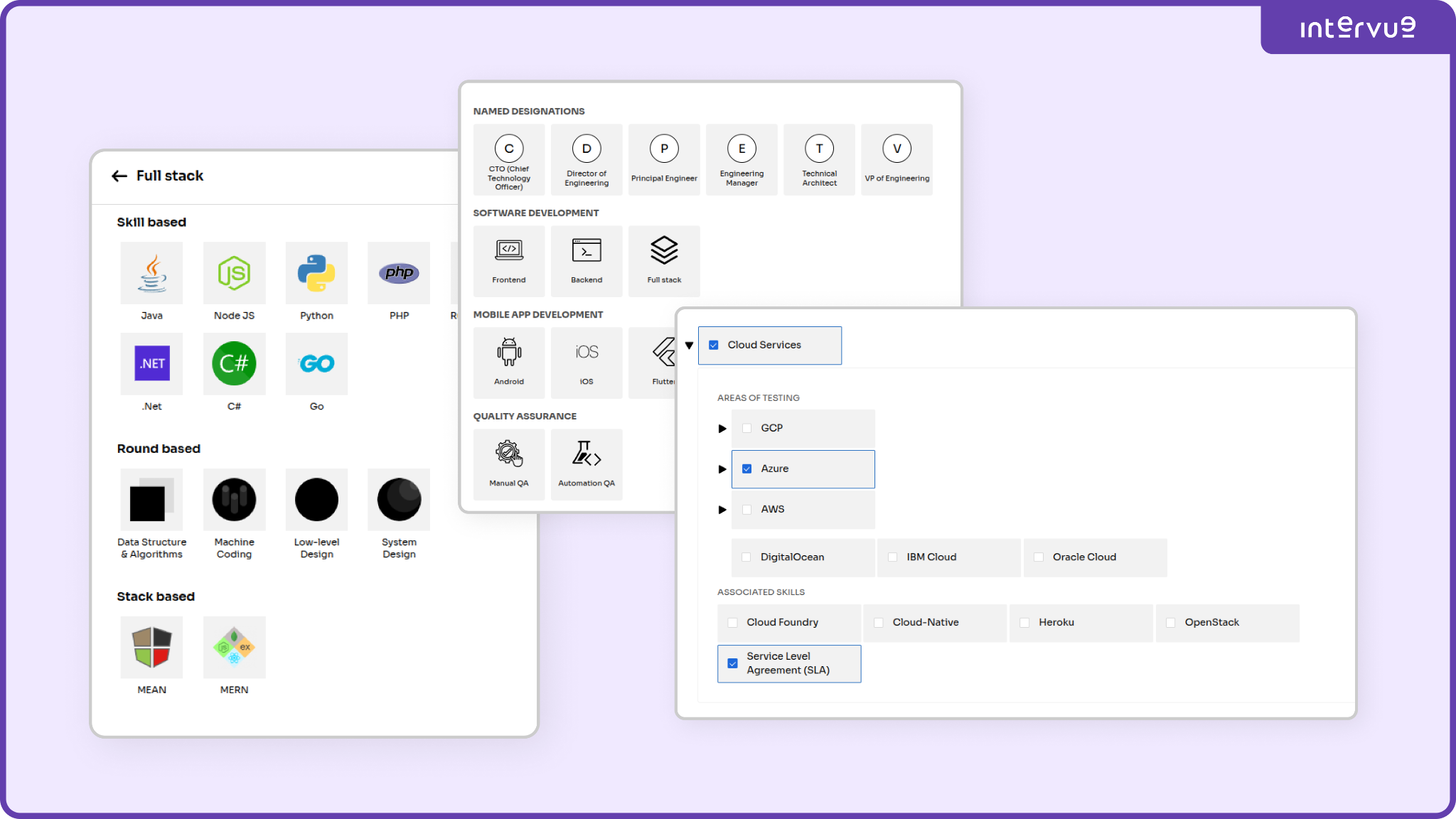
Skills are broken into defined sub-skills, each with clear evaluation criteria, so every interviewer measures the same things, the same way.
2. Interviewer quality: large pool, uneven calibration
Monjin has a sizable interviewer network and onboarding process, but:
- Interviewers are not calibrated to role-specific hiring bars
- Domain gaps are often covered using AI-generated follow-ups
- Evaluation quality varies by interviewer
This can lead to over- or under-evaluation, especially for senior or specialised roles.
Intervue difference:
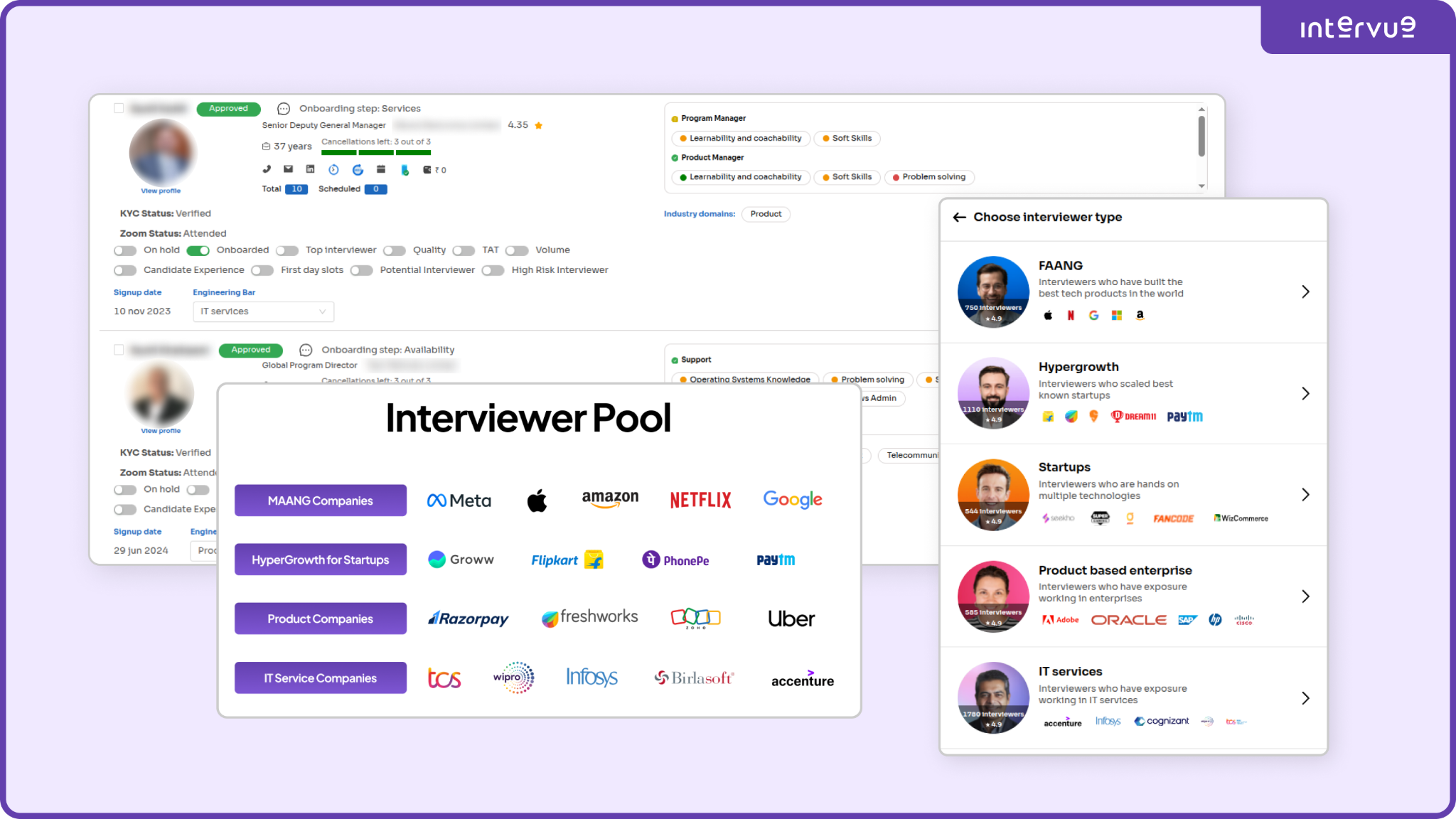
Interviewers are mapped to role seniority and complexity, reducing reliance on AI to compensate for panel gaps.
[Book a Demo→]
3. AI-assisted evaluation: helpful, but not decisive
Monjin uses AI to process transcripts and generate:
- Interview summaries
- Hire/no-hire recommendations
These are useful for quick reviews, but:
- They are not grounded in sub-skill scoring
- They lack transparency
- They are hard to compare across candidates
Intervue difference:
AI supports, but does not replace, structured rubrics + human judgment, resulting in decision-ready reports hiring managers can trust.
4. Interview integrity and assessment controls
Monjin lacks modern integrity safeguards:
- No tab-switch detection
- No copy-paste monitoring
- No proctoring tools
For roles where assessment integrity matters, this becomes a real risk.
Intervue difference:
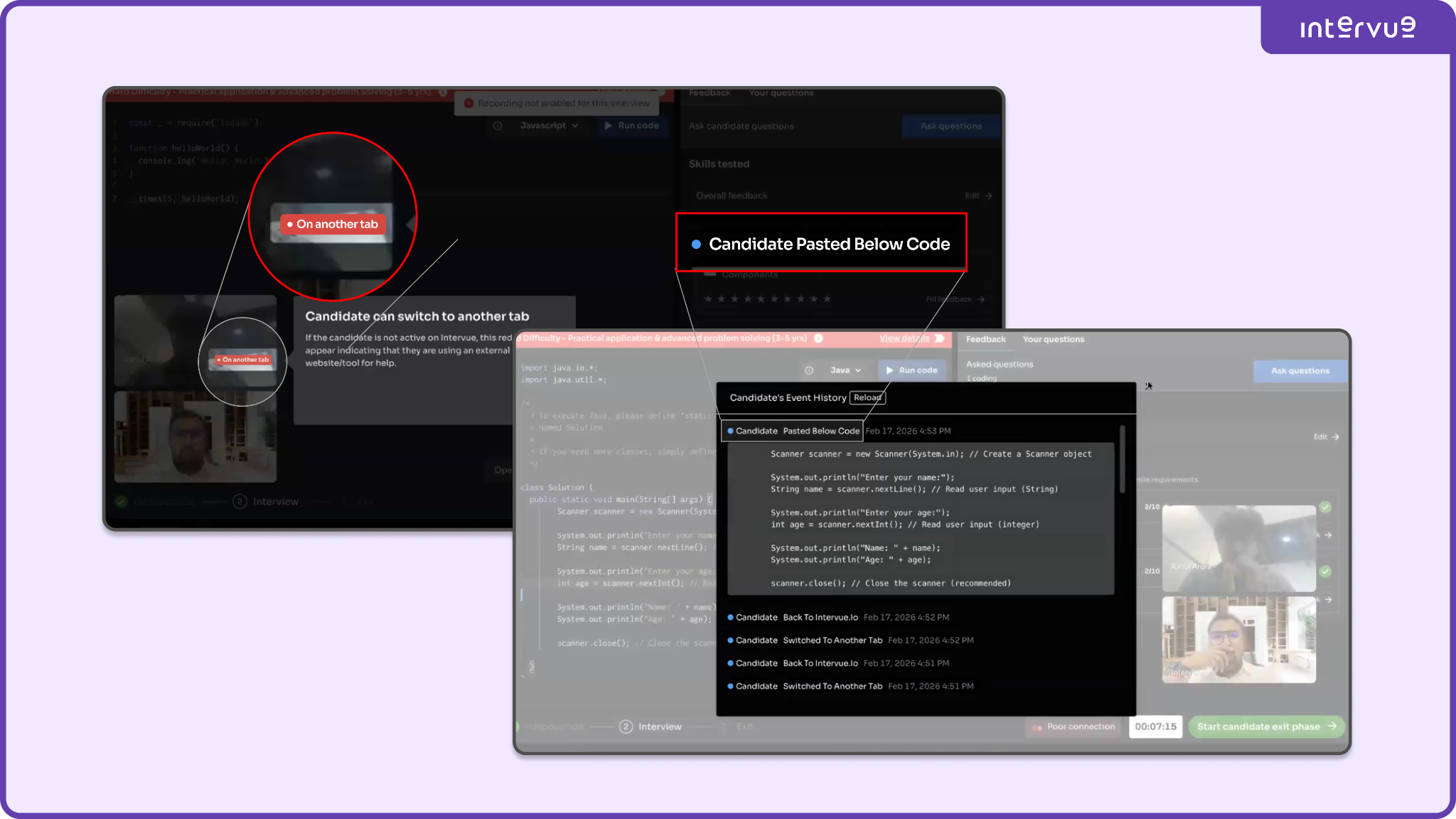
Interviews run in a controlled, proctored environment, ensuring candidate behaviour aligns with evaluation expectations.
5. Scheduling model: high-touch, low scalability
Monjin confirms availability primarily via phone calls (~95% of candidates).
While this boosts confirmations:
- It’s manual
- Recruiter-heavy
- Difficult to scale at volume
Intervue difference:
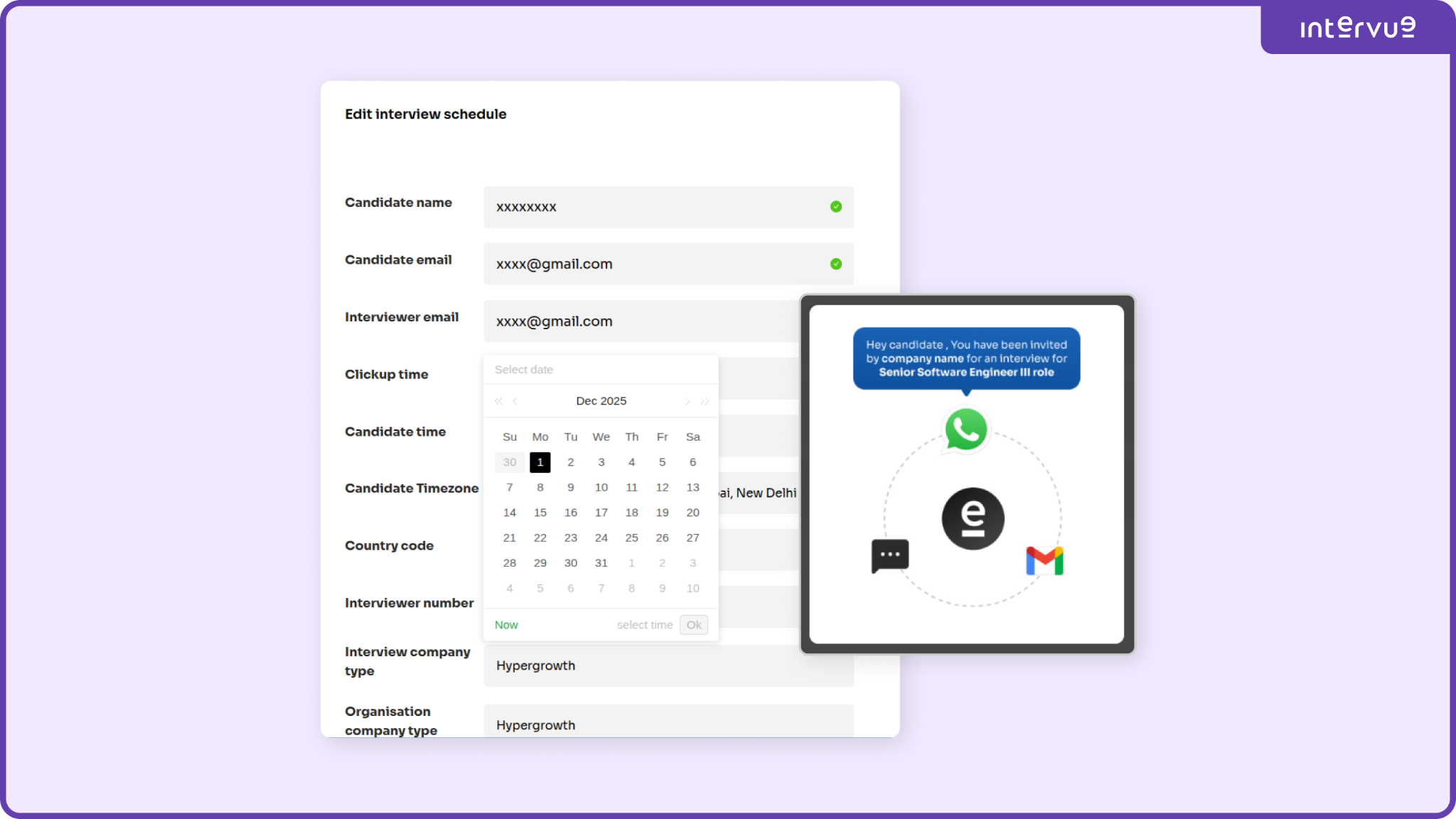
Automated scheduling and reminders via email, WhatsApp, and SMS, with calls layered in only when needed, keeping no-shows low without bottlenecks.
[Book a Demo→]
Monjin pricing
Monjin typically charges:
- A platform fee of ₹12,000
- Followed by a post-paid, per-interview model
Pricing discussions happen during sales conversations. While accessible for smaller volumes, the operational overhead and evaluation limitations can add indirect costs as hiring scales.
The More Structured Alternative: Intervue
If Monjin appeals for its breadth and AI features, Intervue solves the same problem from a system-first perspective.
Where Monjin relies on:
- Skill tags
- AI summaries
- Manual workflows
Intervue delivers:
- Rubric-based evaluation with sub-skills
- Calibrated interviewer matching by seniority
- Proctored interview environments
- Structured, decision-ready reports
- Automated, scalable scheduling
- IT and non-IT coverage on one platform
The outcome isn’t just outsourced interviews, it’s a repeatable, auditable hiring system.
Additional benefits with Intervue
Live interview governance
Real-time access to interviews for compliance, auditing, and interviewer benchmarking.
Accelerated reporting timelines
Structured feedback delivered within ~2 hours to support rapid decision-making.
Interviewer identity transparency
Full visibility into interviewer credentials and professional background.
24×7 global interview scheduling
Continuous interview availability aligned to regional and candidate needs.
Monjin vs Intervue: Which Fits Better?
Monjin is suitable if:
- You need quick IT + non-IT coverage
- Hiring volumes are moderate
- AI summaries are sufficient
- Manual scheduling is acceptable
Intervue is a better fit if:
- Evaluation quality must stay consistent at scale
- Hiring decisions need to be defensible
- Integrity and governance matter
- You want to reduce recruiter effort end-to-end
At scale, the difference isn’t features, it’s confidence in outcomes
[See how Intervue compares for your hiring needs →]
Frequently Asked Questions
Does Monjin support non-IT roles?
Yes. Monjin supports IT and non-IT roles, including niche functions like HR and marketing.
Does Monjin use structured rubrics?
No. Monjin allows skill tagging and weightages but does not use sub-skill-level rubrics with defined evaluation criteria.
How are interviews scheduled on Monjin?
Most candidates are contacted via phone to confirm availability, with occasional use of Calendly links.
Are Monjin interviews proctored?
No. Monjin lacks tab tracking, copy-paste detection, and other proctoring controls.
What’s a strong alternative to Monjin for structured, scalable hiring?
Intervue offers rubric-based evaluation, interviewer calibration, proctored interviews, and structured reporting across IT and non-IT roles.